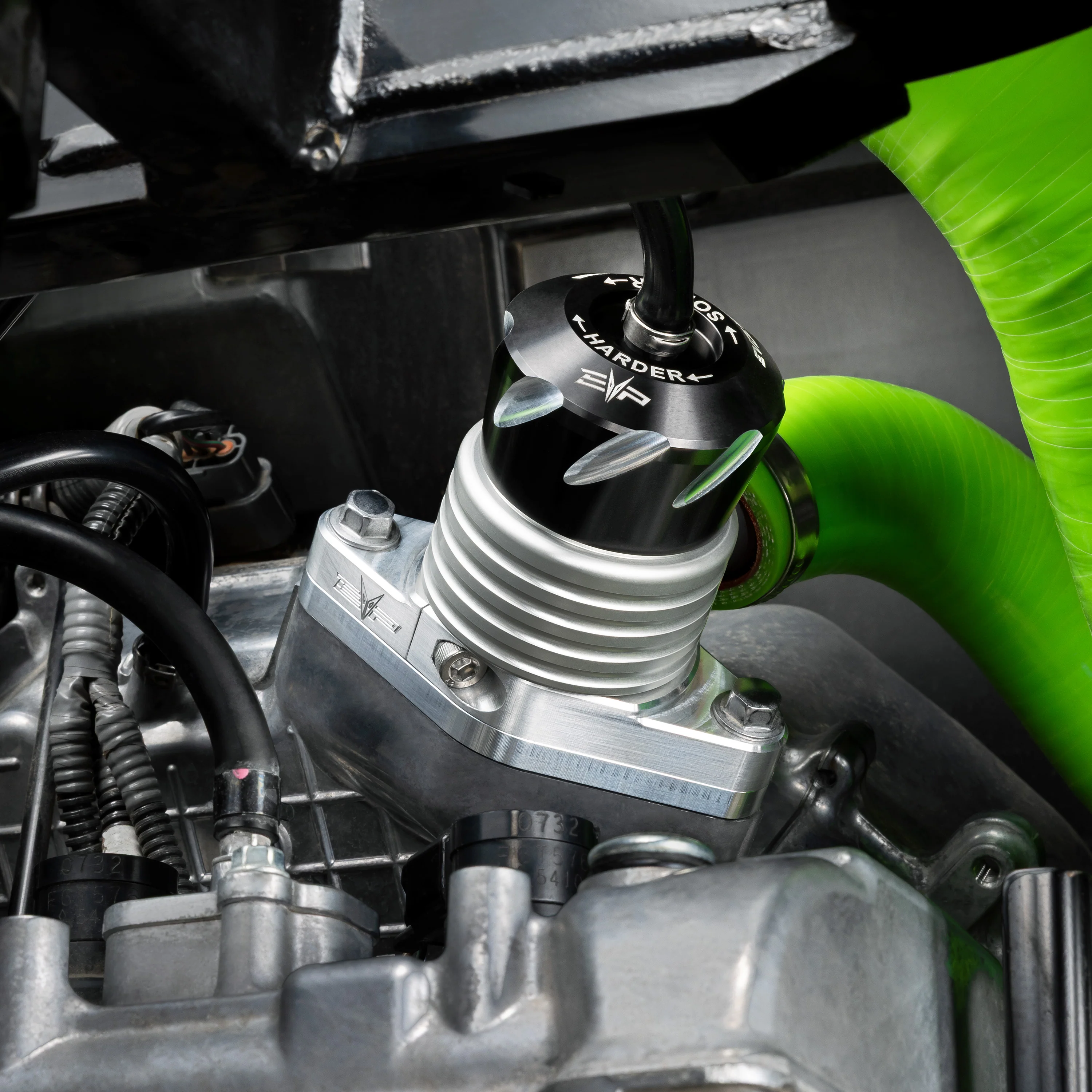
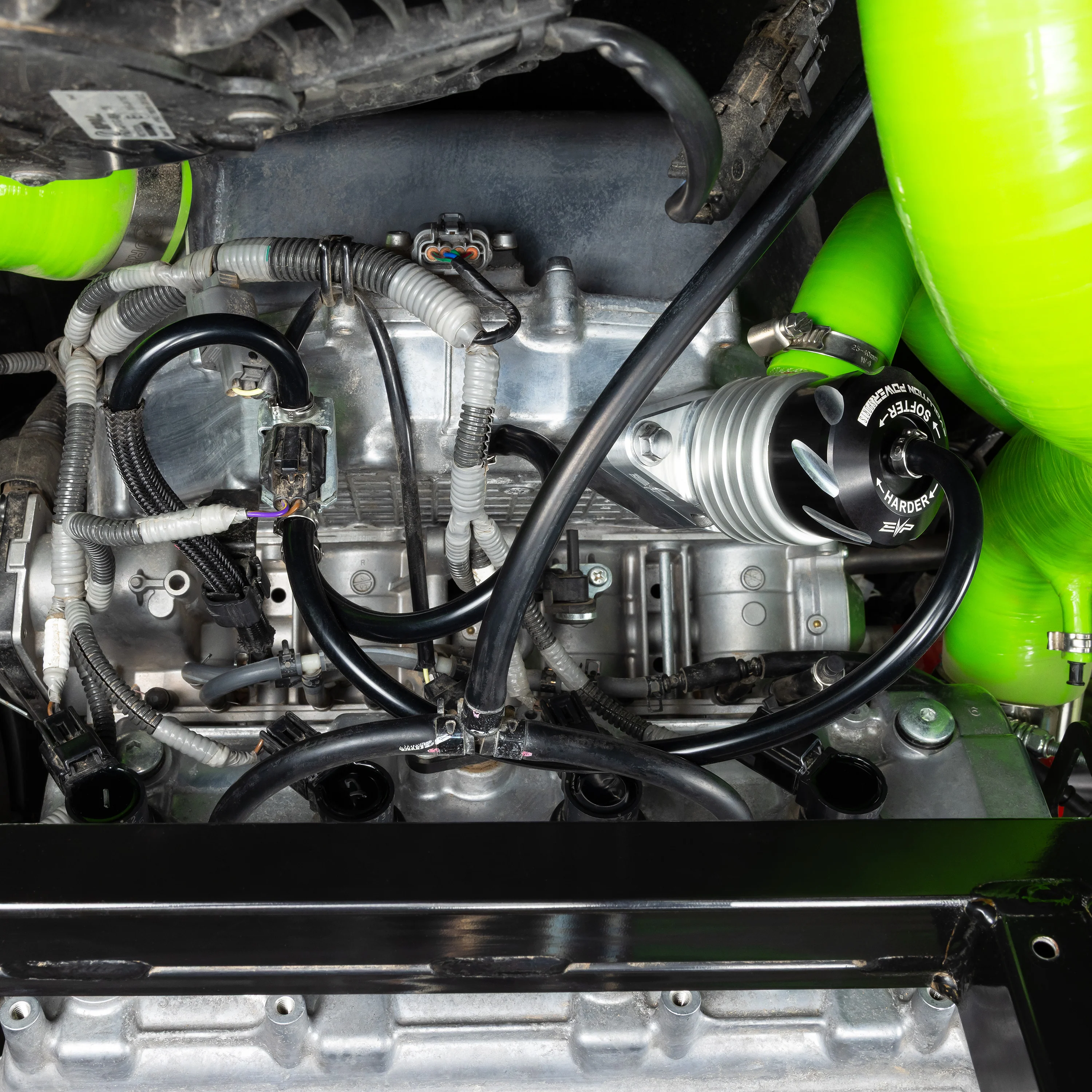
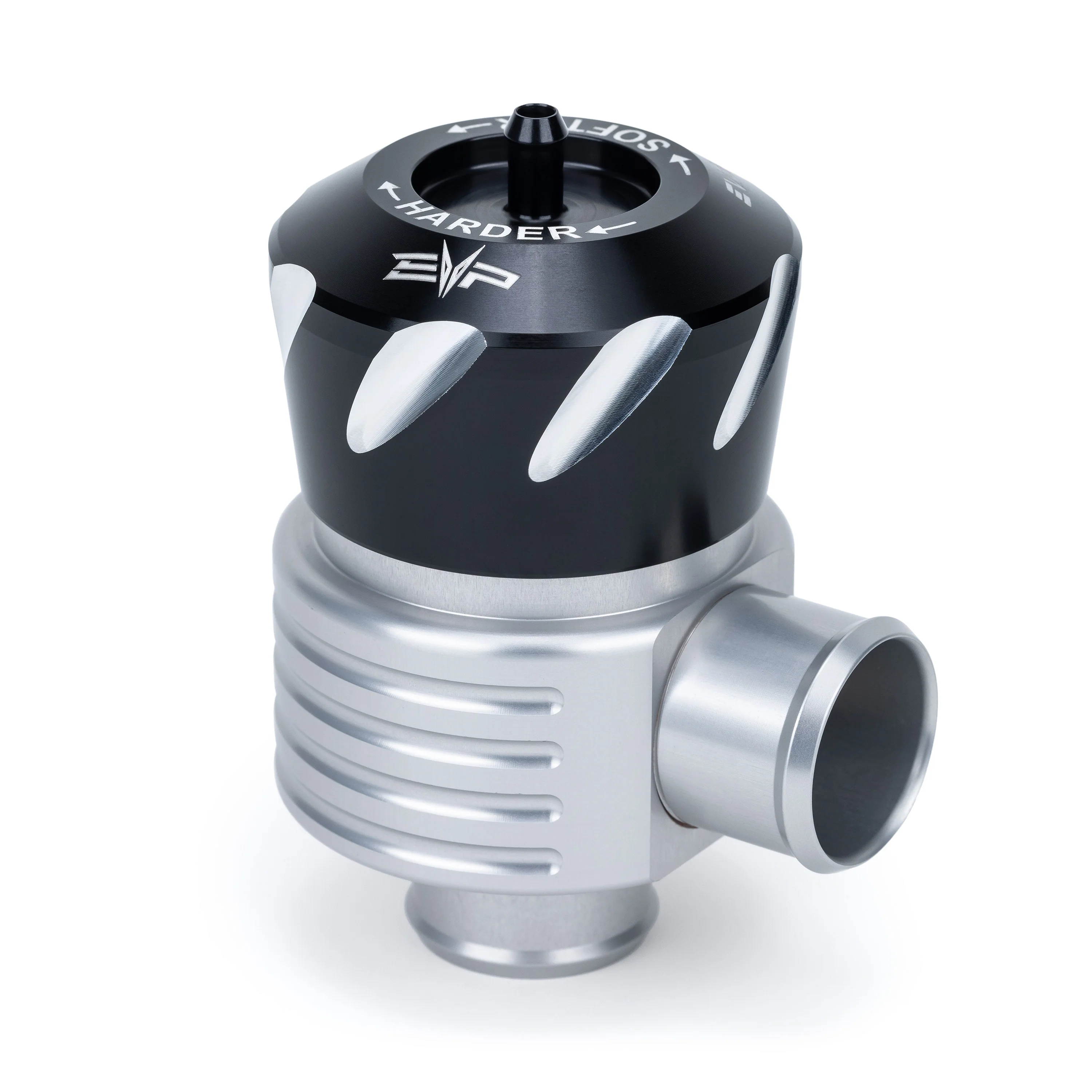
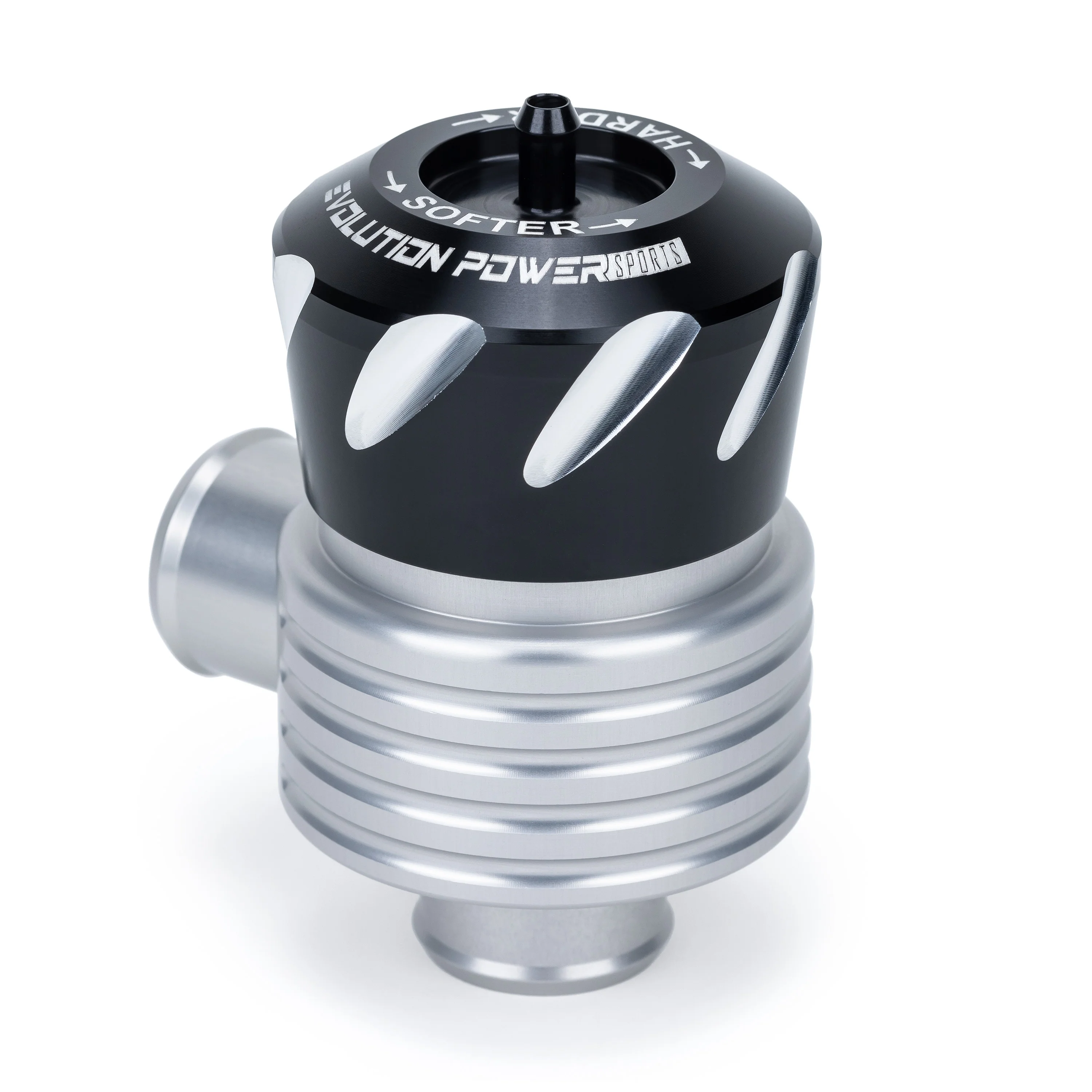
EVP Billet Boost Recirculating Valve (BRV) for Kawasaki Teryx H2
DESCRIPTION
- Best in the Dessert, Drag Race, and Short Course Race tested
- Tested to 500+ horsepower
- Simple Installation
- The body, piston and cap are machined from billet aluminum
- The cap is anodized and re-machined for easy gripping for spring tension adjustments
- The piston and body are hard coated with impregnated Teflon anti friction matrix
- Designed with three sealing o-rings for leak proof operation vs factory design having no sealing o-rings
- Prevent compressor surge, which leads to loss in performance and throttle response when the throttle closes then reopens at speed
- Does not have the "pshh" sound that some customers look to avoid
- Proudly machined and made in the USA
KIT INCLUDES:
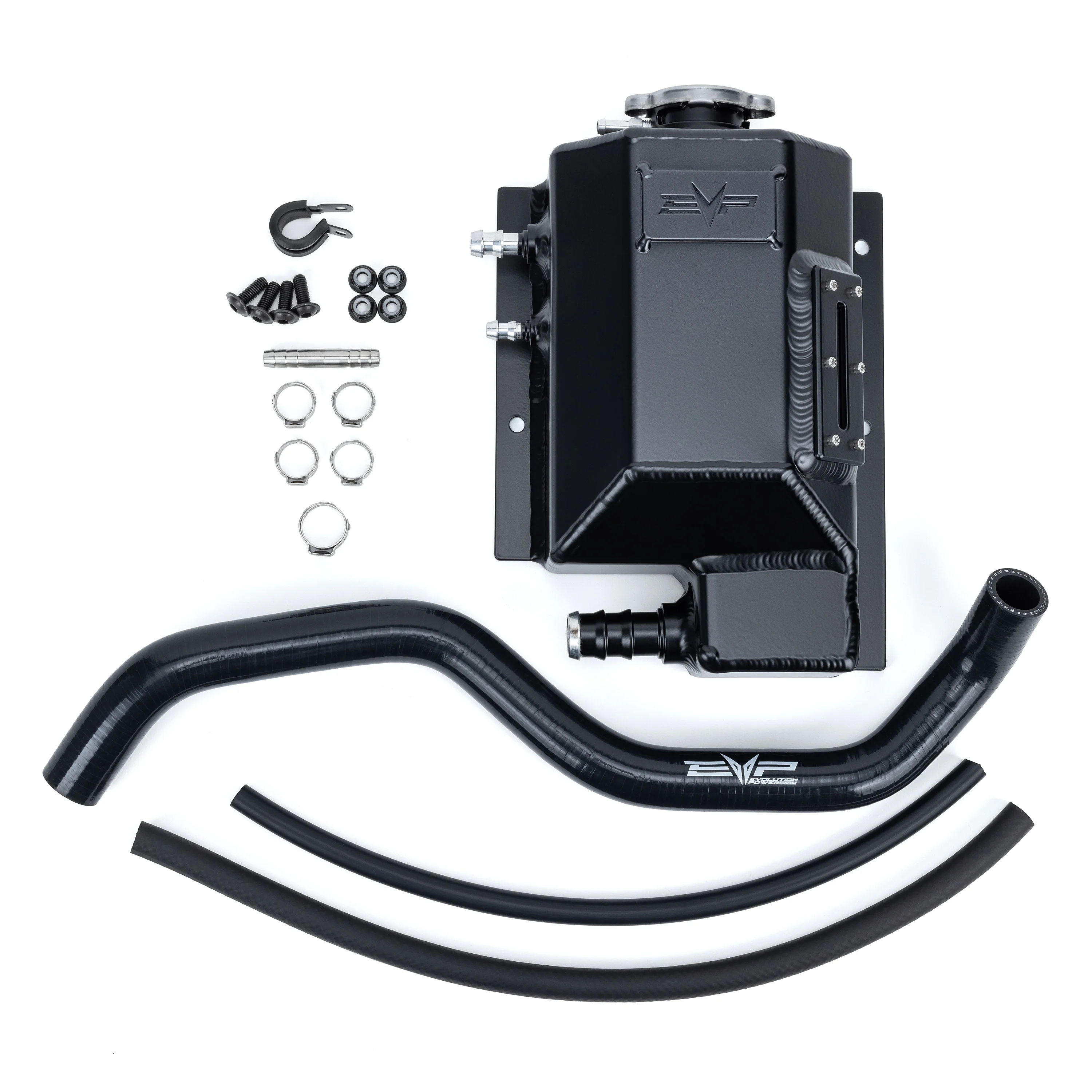
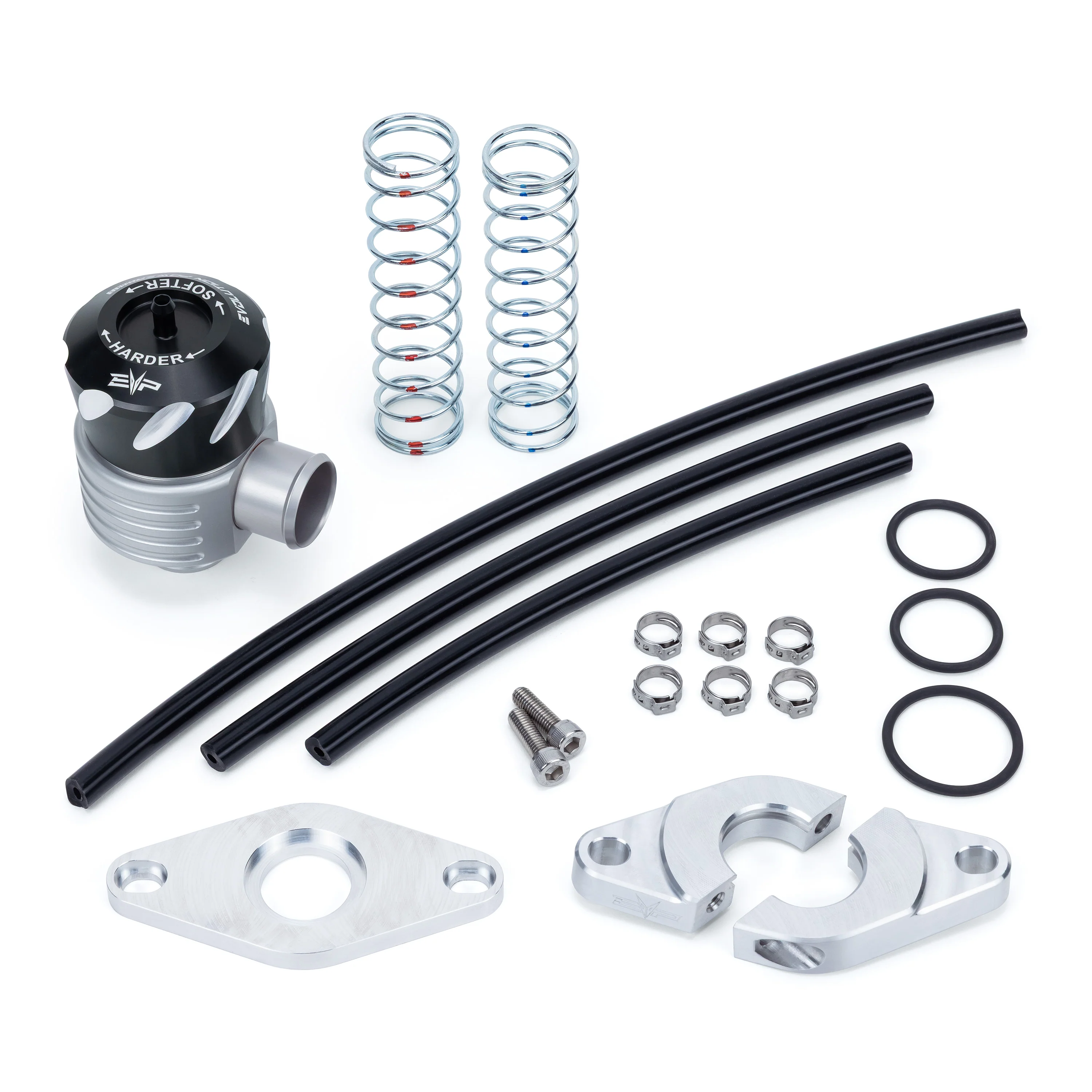
- EVP Billet BRV with Adjustable Springs
- H2 BRV Base Plate
- H2 BRV Clamps (2)
- Socket Head Cap Screws (2)
- O-Rings (3)
- Vacuum Hoses (3)
- Pinch Clamps (6)
What's the Difference Between a Blow Off Valve and a Boost Recirculating Valve?
A blow-off valve (BOV) and boost recirculating valve (BRV) are very similar mechanically and perform similar jobs; they just do it in two different ways. Both valve bodies are attached to the charge tube, and both are designed to release turbocharger pressurized air once the throttle body closes to prevent turbocharger compressor "stalling". Both valves are also connected to a manifold vacuum/pressure port so when the throttle body closes, the manifold vacuum pulls the BRV/BOV piston open and when the throttle blade opens and the manifold sees positive pressure, the piston of the BOV/BRV valve closes. When the BRV valve is open, the built-up pressure in the charge air system gets diverted back to the fresh air side of the turbocharger and helps to keep the turbocharger spooled up when the throttle is being modulated from part throttle to wide open throttle then back to part throttle. This makes the boost response crisper in these throttle modulation situations. A BOV is operated the same way but instead of venting the built-up pressure back to the turbo inlet, a BOV vents most of this pressurized air to the atmosphere and the notorious 'Pssshh' sound is emitted.
FITMENT
2026 Kawasaki Teryx H2
INSTRUCTIONS
Product Information
Product Information
Shipping & Returns
Shipping & Returns

EVP Billet Boost Recirculating Valve (BRV) for Kawasaki Teryx H2
EVP Billet Boost Recirculating Valve (BRV) for Kawasaki Teryx H2
DESCRIPTION
- Best in the Dessert, Drag Race, and Short Course Race tested
- Tested to 500+ horsepower
- Simple Installation
- The body, piston and cap are machined from billet aluminum
- The cap is anodized and re-machined for easy gripping for spring tension adjustments
- The piston and body are hard coated with impregnated Teflon anti friction matrix
- Designed with three sealing o-rings for leak proof operation vs factory design having no sealing o-rings
- Prevent compressor surge, which leads to loss in performance and throttle response when the throttle closes then reopens at speed
- Does not have the "pshh" sound that some customers look to avoid
- Proudly machined and made in the USA
KIT INCLUDES:
- EVP Billet BRV with Adjustable Springs
- H2 BRV Base Plate
- H2 BRV Clamps (2)
- Socket Head Cap Screws (2)
- O-Rings (3)
- Vacuum Hoses (3)
- Pinch Clamps (6)
What's the Difference Between a Blow Off Valve and a Boost Recirculating Valve?
A blow-off valve (BOV) and boost recirculating valve (BRV) are very similar mechanically and perform similar jobs; they just do it in two different ways. Both valve bodies are attached to the charge tube, and both are designed to release turbocharger pressurized air once the throttle body closes to prevent turbocharger compressor "stalling". Both valves are also connected to a manifold vacuum/pressure port so when the throttle body closes, the manifold vacuum pulls the BRV/BOV piston open and when the throttle blade opens and the manifold sees positive pressure, the piston of the BOV/BRV valve closes. When the BRV valve is open, the built-up pressure in the charge air system gets diverted back to the fresh air side of the turbocharger and helps to keep the turbocharger spooled up when the throttle is being modulated from part throttle to wide open throttle then back to part throttle. This makes the boost response crisper in these throttle modulation situations. A BOV is operated the same way but instead of venting the built-up pressure back to the turbo inlet, a BOV vents most of this pressurized air to the atmosphere and the notorious 'Pssshh' sound is emitted.
FITMENT
2026 Kawasaki Teryx H2
INSTRUCTIONS
Original: $254.00
-65%$254.00
$88.90Product Information
Product Information
Shipping & Returns
Shipping & Returns
Description
DESCRIPTION
- Best in the Dessert, Drag Race, and Short Course Race tested
- Tested to 500+ horsepower
- Simple Installation
- The body, piston and cap are machined from billet aluminum
- The cap is anodized and re-machined for easy gripping for spring tension adjustments
- The piston and body are hard coated with impregnated Teflon anti friction matrix
- Designed with three sealing o-rings for leak proof operation vs factory design having no sealing o-rings
- Prevent compressor surge, which leads to loss in performance and throttle response when the throttle closes then reopens at speed
- Does not have the "pshh" sound that some customers look to avoid
- Proudly machined and made in the USA
KIT INCLUDES:
- EVP Billet BRV with Adjustable Springs
- H2 BRV Base Plate
- H2 BRV Clamps (2)
- Socket Head Cap Screws (2)
- O-Rings (3)
- Vacuum Hoses (3)
- Pinch Clamps (6)
What's the Difference Between a Blow Off Valve and a Boost Recirculating Valve?
A blow-off valve (BOV) and boost recirculating valve (BRV) are very similar mechanically and perform similar jobs; they just do it in two different ways. Both valve bodies are attached to the charge tube, and both are designed to release turbocharger pressurized air once the throttle body closes to prevent turbocharger compressor "stalling". Both valves are also connected to a manifold vacuum/pressure port so when the throttle body closes, the manifold vacuum pulls the BRV/BOV piston open and when the throttle blade opens and the manifold sees positive pressure, the piston of the BOV/BRV valve closes. When the BRV valve is open, the built-up pressure in the charge air system gets diverted back to the fresh air side of the turbocharger and helps to keep the turbocharger spooled up when the throttle is being modulated from part throttle to wide open throttle then back to part throttle. This makes the boost response crisper in these throttle modulation situations. A BOV is operated the same way but instead of venting the built-up pressure back to the turbo inlet, a BOV vents most of this pressurized air to the atmosphere and the notorious 'Pssshh' sound is emitted.
FITMENT
2026 Kawasaki Teryx H2